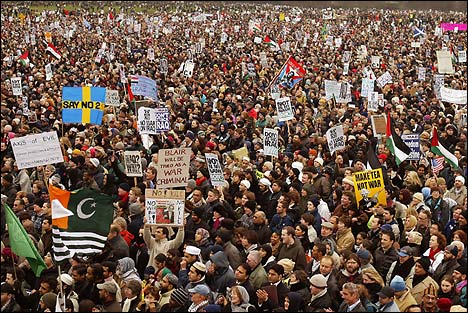
At the base of many historical conflicts between the people of a nation and its government is peaceful protest. When dissatisfied citizens compose the courage to speak out, tensions often run high and violence ensues. The London riots, for example, started as peaceful protest over a cop shooting and escalated to destruction for destruction's sake. On the other hand, the United States never would have been gained sovereignty if not for organized opposition. These contradictions seem to beg the question of exactly when protest crosses the line between productive and destructive.
It seems that the effectiveness of most protests can ultimately be traced back to the motives and discipline of said protest's architects. The key players in the London riots, for example, were young men with no clear motive but to set fire to a city that they were unhappy with. Additionally, many nobly intentioned protests (take, for example, the 2007 Burmese anti-government protests) fail to enact meaningful change because they do not have the willpower, strategy, or resources to topple societal order. The 18th century American Revolutionaries, on the other hand, had a distinct plan and governmental/military tools at their disposal because of their elite status in the preexisting society.
It is therefore (after much deliberation) my conclusion that certain conditions absolutely must exist before any kind of successful revolt can take place. The architects of protest must be informed and disciplined, the citizenry must be willing and able to call for change, and the movement must have certain resources at its disposal (whether they be financial, political, military, or cultural). If these conditions do not exist, odds are that the movement will fail loudly and violently, often causing the deaths of innocent people.
